





Ever had that moment when your dentist points to an X-ray and shows you a problem you had absolutely no idea existed? It’s like discovering there’s been a party going on in your mouth and you weren’t invited, except this party involves decay, infections, and other dental drama you definitely don’t want.
The truth is, your mouth is brilliant at keeping secrets. Many serious dental problems develop silently, hiding away where you can’t see or feel them until they become major issues. That’s where dental imaging becomes your mouth’s truth detector, revealing hidden problems before they turn into dental emergencies.
At Sunbury Dental House, we use advanced dental imaging technology to help patients from Sunbury, Gisborne, and Diggers Rest uncover hidden dental issues that could be brewing beneath the surface. Sometimes what looks perfectly fine on the outside tells a completely different story on the inside.
Why Dental Problems Love Playing Hide And Seek
Your teeth and surrounding structures are masters of disguise when it comes to hiding problems. Unlike a cut on your skin that’s immediately visible, dental issues often develop in areas you simply can’t see or reach.
Common hiding spots include:
- Between teeth where decay can develop unnoticed
- Under existing fillings or crowns
- Around tooth roots beneath the gum line
- In the jawbone where infections can spread
- Behind wisdom teeth in hard-to-reach areas
Many dental problems also develop slowly and painlessly in their early stages. By the time you feel pain or notice visible changes, the problem has often progressed significantly. This is why dental imaging for hidden problems is so crucial for maintaining oral health.
According to Australian dental research, approximately 40% of dental problems detected through imaging show no visible symptoms, highlighting the importance of regular diagnostic screening.
Types of Dental Imaging Technology
Modern dentistry offers several imaging technologies, each designed to reveal different types of hidden problems with remarkable precision.
Traditional X-Rays (Radiographs): Still the workhorse of dental imaging, traditional X-rays reveal decay between teeth, bone loss, infections, and structural problems that aren’t visible during clinical examination.
Digital X-Rays: These provide instant, high-quality images with significantly less radiation exposure than traditional film X-rays. They can be enhanced and manipulated on computer screens for better diagnosis.
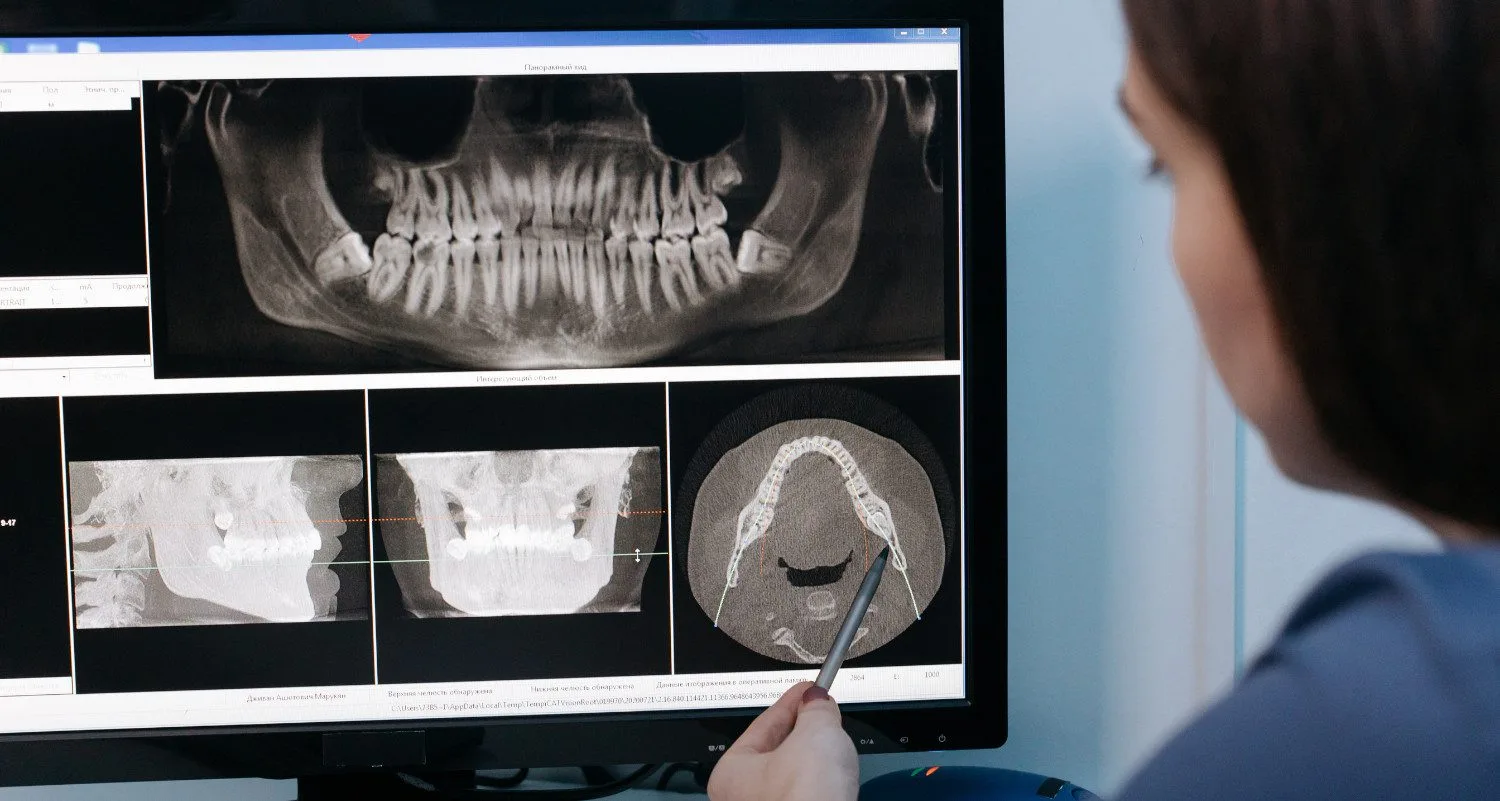
Panoramic X-Rays: These capture your entire mouth in a single image, revealing wisdom teeth position, jaw joint problems, sinus issues, and overall bone structure.
3D Imaging (CBCT): Cone beam computed tomography provides detailed three-dimensional images of teeth, bones, and soft tissues, offering unprecedented detail for complex cases.
Intraoral Cameras: While not technically imaging, these tiny cameras allow us to show you exactly what we’re seeing in real-time, making hidden problems visible on a screen.
Hidden Problems That Dental Imaging Reveals
Dental imaging for hidden problems uncovers a surprising variety of issues that would otherwise go undetected until they become serious.
Decay Between Teeth: Cavities love to develop in the tight spaces between teeth where your toothbrush can’t reach effectively. These areas appear normal during visual examination but show up clearly on X-rays as dark spots.
Infections and Abscesses: Root infections often develop without symptoms, slowly destroying bone tissue around tooth roots. X-rays reveal these infections as dark areas around root tips, allowing for early intervention.
Bone Loss from Gum Disease: Periodontal disease can destroy the bone supporting your teeth without obvious symptoms. Imaging shows the extent of bone loss, helping guide treatment decisions.
Impacted Wisdom Teeth: Many wisdom teeth develop in problematic positions that aren’t visible until they’re examined with panoramic X-rays. Early detection allows for proactive management.
Cracks and Fractures: Tiny cracks in teeth can be invisible to the naked eye but show up on detailed imaging, preventing potential tooth loss.
Failed Root Canal Treatments: Previous root canal work can fail silently, with infections redeveloping around treated roots. Imaging detects these failures before they cause pain.
Early Detection: The Game Changer
The power of dental imaging lies in its ability to detect problems at their earliest, most treatable stages. This early detection advantage transforms dental care from reactive to preventive.
Benefits of early detection include:
- Simpler, less invasive treatments
- Better long-term outcomes
- Significant cost savings
- Preserved tooth structure
- Prevention of emergency situations
For example, a small cavity detected through imaging might require only a simple filling, whilst the same cavity left undetected could eventually need a crown, root canal, or even extraction.
How Different Imaging Types Target Specific Problems
Each type of dental imaging excels at revealing particular hidden problems, which is why comprehensive diagnosis often involves multiple imaging techniques.
Bitewing X-Rays: These specialized images focus on the back teeth and are particularly effective at detecting decay between teeth and early bone loss from gum disease.
Periapical X-Rays: These show the entire tooth from crown to root tip, revealing infections, root fractures, and bone abnormalities around specific teeth.
Panoramic Imaging: This broad view is excellent for detecting impacted teeth, jaw joint problems, sinus issues, and getting an overall picture of oral health.
3D Imaging Applications: Reserved for complex cases, 3D imaging provides detailed information for implant planning, wisdom tooth assessment, and complicated root canal diagnoses.
The Diagnostic Process at Sunbury Dental House
Our approach to dental imaging for hidden problems is both systematic and personalized, ensuring we gather the information needed for accurate diagnosis without unnecessary radiation exposure.
Initial Assessment: We begin with a thorough clinical examination, identifying areas of concern that might benefit from imaging investigation.
Targeted Imaging: Based on our clinical findings and your symptoms, we select the most appropriate imaging techniques to investigate potential problems.
Image Analysis: Our experienced team carefully analyzes all images, looking for subtle signs of developing problems that might not be immediately obvious.
Treatment Planning: When hidden problems are detected, we develop comprehensive treatment plans that address issues at their current stage, preventing progression to more serious conditions.
Technology Advances in Dental Imaging
Modern dental imaging technology continues to evolve, providing better diagnostic capabilities with improved patient comfort and safety.
Reduced Radiation Exposure: Digital imaging requires significantly less radiation than traditional film X-rays, making regular screening safer for patients.
Instant Results: Digital images appear immediately on computer screens, allowing for real-time discussion of findings and treatment options.
Enhanced Image Quality: Computer enhancement allows us to adjust contrast, brightness, and magnification, revealing details that might be missed on traditional films.
Better Patient Education: Digital images can be easily shared and explained, helping patients understand their dental health and treatment needs.
When Imaging Reveals Problems: What Happens Next
Discovering hidden dental problems through imaging can feel overwhelming, but early detection is actually good news. It means we can address issues before they become painful, expensive, or threaten your oral health.
Our approach includes:
- Clear explanation of findings using visual aids
- Discussion of treatment options and timeframes
- Priority ranking when multiple issues are detected
- Flexible treatment scheduling to fit your needs
Most hidden problems detected through imaging can be treated conservatively when caught early, preserving tooth structure and maintaining oral health.
The Cost-Benefit of Diagnostic Imaging
While dental imaging involves some cost, the investment pays significant dividends in preventing larger problems and more expensive treatments.
According to Australian dental studies, patients who receive regular diagnostic imaging require 60% fewer emergency treatments and experience significantly lower lifetime dental costs compared to those who skip routine imaging.
The peace of mind that comes from knowing your oral health status is also invaluable, allowing you to plan for any needed treatments rather than dealing with unexpected emergencies.
Key Takeaways
- 40% of dental problems show no visible symptoms initially
- Multiple imaging types target different hidden problems
- Early detection enables simpler, more conservative treatments
- Modern digital imaging uses minimal radiation exposure
- Regular diagnostic imaging prevents dental emergencies
- Investment in imaging saves money on future treatments
Ready to Uncover Your Dental Secrets?
If it’s been a while since your last comprehensive dental examination with imaging, you might be surprised by what’s hiding beneath the surface. Don’t wait for problems to announce themselves with pain – by then, treatment becomes more complex and expensive.
At Sunbury Dental House, we use state-of-the-art dental imaging technology to detect hidden problems before they become major issues. Our comprehensive diagnostic approach ensures nothing important goes unnoticed.
Call us on 03 8820 1809 or fill out our enquiry form to book your diagnostic imaging consultation. Let’s work together to keep your oral health on track by catching problems early, when they’re easiest to treat.