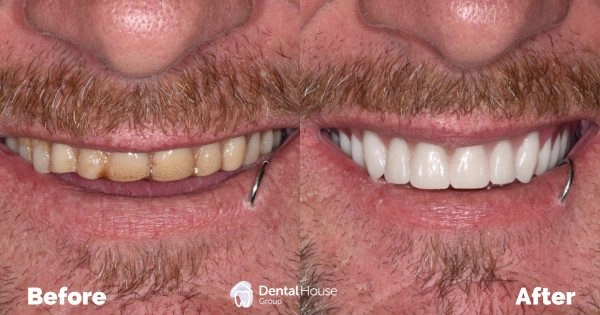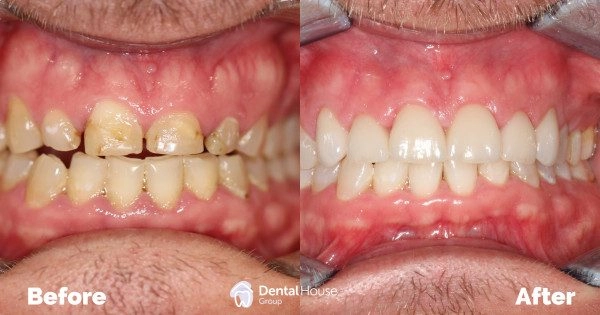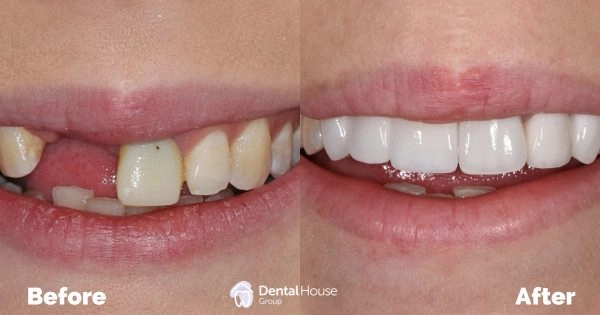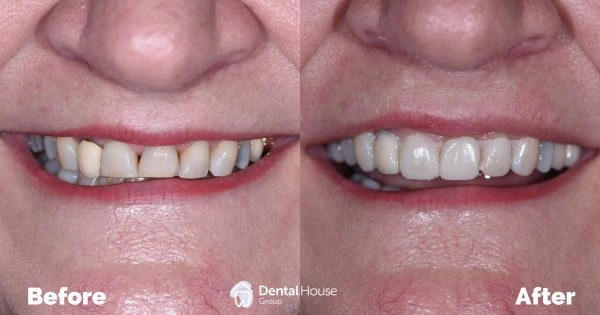


Can Porcelain Veneers Improve Discoloured Teeth in Bacchus Marsh?
Presenting Clinical Problem
- Multiple discoloured composite restorations affecting aesthetics
- Patient concerns regarding long-standing aesthetic dissatisfaction
- Assessment of tooth structure and restoration integrity
- Evaluation of suitability for veneer placement
- Primary objective: Improve tooth appearance through conservative restorative approach
Treatment Plan & Clinical Process
Phase 1: Assessment and Design Planning
- Comprehensive examination of existing restorations and tooth structure
- Evaluation of occlusal relationships and bite stability
- Digital smile design to visualise potential outcomes
- Discussion of treatment options, limitations and maintenance requirements
- Shade selection and customisation planning
Phase 2: Veneer Preparation
- Removal of existing discoloured restorations
- Conservative tooth preparation to accommodate porcelain thickness
- Precision impression techniques or digital scanning
- Shade verification under multiple lighting conditions
- Temporary veneer placement during laboratory fabrication period
Phase 3: Veneer Placement and Finalisation
- Trial fitting to verify shade, shape and fit
- Tooth surface preparation for optimal bonding
- Permanent cementation using appropriate resin systems
- Removal of excess cement and margin refinement
- Occlusal adjustment and post-placement care instructions
Clinical Outcome
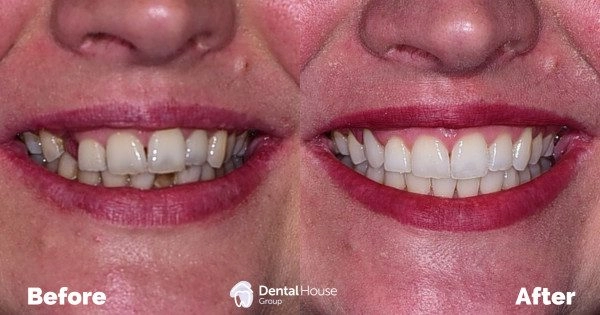
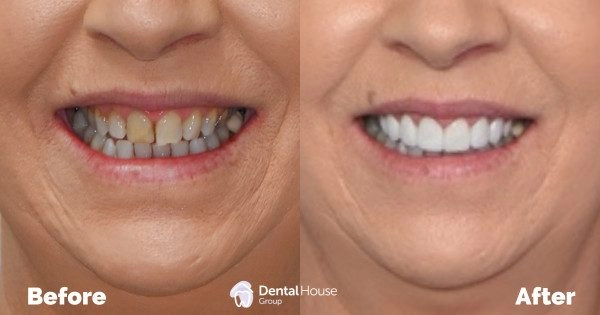
Six porcelain veneers were placed over three appointments to address discolouration and aesthetic concerns. The treatment involved removing existing failing restorations and preparing teeth to accommodate laboratory-fabricated porcelain veneers matched to the patient’s facial characteristics and desired appearance.Individual responses to veneer treatment vary significantly. Treatment outcomes cannot be guaranteed. Veneers require irreversible tooth preparation in most cases, meaning teeth will always require coverage. Porcelain veneers can chip, fracture or debond over time, with typical longevity ranging from 10-15 years though outcomes vary considerably. Maintaining proper oral hygiene is essential to prevent decay at veneer margins. Not all aesthetic concerns can be fully addressed through veneers alone.
Frequently Asked Questions for Bacchus Marsh Patients
Can porcelain veneers replace old fillings?
Porcelain veneers can cover teeth with old or failing fillings, though existing restorations are typically removed during tooth preparation. Veneers provide superior aesthetics compared to composite restorations but require more extensive tooth preparation. The choice between replacing fillings with new composite versus placing veneers depends on the extent of tooth damage, aesthetic goals and budget considerations.
How many veneers are typically needed?
The number of veneers required varies based on individual aesthetic concerns, smile width and treatment goals. Common configurations include 4-6 veneers for upper front teeth or 8-10 veneers for full upper arch coverage. Treating fewer teeth may create colour mismatches with adjacent untreated teeth. Comprehensive smile design helps determine the optimal number for each case.
What happens if a veneer breaks?
Broken or damaged veneers typically require complete replacement rather than repair. The underlying tooth preparation means the tooth cannot be left uncovered. Temporary coverage is provided whilst a new veneer is fabricated. In some cases, adjacent veneers may also need replacement to ensure colour matching with the new restoration.